Círculo de palabra
13 Keej

Citando a Julian Katari del 24/04/2025, 10:13 am
Picking
The book of readings I sometimes use to see what it says on specific day combinations has the word Judgment day for today. I was going to use it and part from it because it sounds attractive, and I can relate to it vaguely from my reading, but I picked not to. The paragraph I erased talked about how monotheism and this concept of judgment impregnates everything, and how important it is to pick a different worldview, so I instead simply picked to erase and write this instead. Today's deer wants us to complete a healing, and from this worldview I hope you pick to walk away from, we get the idea that cutting off, killing, erasing and eliminating are key ways to get rid of things that hurt us or are bad for us. Instead let's think of picking. You don't have to eliminate or cut away anything, you can better think of it like picking what you do consider is good for you.
In this way, all the thoughts that come to you that you stalk to discover they are from that other worldview, you can choose not to listen to. You can pick which things you will say, eat and do, and that is the way you properly heal what you know you must heal. Don't think of eliminating forever that habit, instead, pick to not eat that, not say that or not do that just now that you remembered it. Only with this delicacy and this humility of not wanting to commit forever, can we find true progress.
We must however, if we want to be in the time and in balance, pick right. Tomorrow we enter the beautiful star trecena, and we surely want to be pretty for it.

Picking
The book of readings I sometimes use to see what it says on specific day combinations has the word Judgment day for today. I was going to use it and part from it because it sounds attractive, and I can relate to it vaguely from my reading, but I picked not to. The paragraph I erased talked about how monotheism and this concept of judgment impregnates everything, and how important it is to pick a different worldview, so I instead simply picked to erase and write this instead. Today's deer wants us to complete a healing, and from this worldview I hope you pick to walk away from, we get the idea that cutting off, killing, erasing and eliminating are key ways to get rid of things that hurt us or are bad for us. Instead let's think of picking. You don't have to eliminate or cut away anything, you can better think of it like picking what you do consider is good for you.
In this way, all the thoughts that come to you that you stalk to discover they are from that other worldview, you can choose not to listen to. You can pick which things you will say, eat and do, and that is the way you properly heal what you know you must heal. Don't think of eliminating forever that habit, instead, pick to not eat that, not say that or not do that just now that you remembered it. Only with this delicacy and this humility of not wanting to commit forever, can we find true progress.
We must however, if we want to be in the time and in balance, pick right. Tomorrow we enter the beautiful star trecena, and we surely want to be pretty for it.
Citando a Julian Katari del 09/01/2026, 5:02 pmHappy ending.
We are so much told about enjoying the process, the moment, and that is true if we are rushing it and not enjoying it, what a wise thing to keep in mind. But in a great way, the end is the only purpose of the process. Like the deep sea octopus female, that once it lays eggs it will stay there with them, will shut down its neural system so only the optical part stays awake, will stop eating and will die once the hatchlings are born, so she doesn't eat them. Sounds like a not enjoying the process kind of thing and giving it all for the end, the goal.
From the great teachings of the Mesoamericans we get the message from death, yesterday's nawal, that what occurs in the afterlife depends not really on how we live our lives, but how we die. Also like in a song, or a book, or a first impression. Your last words, last minutes and seconds, are the most critical, they are what will leave the afterlife impression on the receiver. Sexually we get the same teaching. It's important to enjoy the process, take time, live every part of it, but how good is it if at the end we don't finish?
Today's nawal is here to heal us from our pains and troubles telling us that as long as we are pursuing the right goal, having a hard time or trouble doing it is justifiable. It is not that much about the now as it is accomplishing something, getting to an end. This is very spiritual, very much a soul thing, a mental state, a spiritual state.
We have been taught to live each day like it's the last one. Sure, it's important to enjoy yourself while you are doing something, but you know today is not your last day. If you don't have a spiritual goal, and end to your means, then it just might be what you are missing.
Happy ending.
We are so much told about enjoying the process, the moment, and that is true if we are rushing it and not enjoying it, what a wise thing to keep in mind. But in a great way, the end is the only purpose of the process. Like the deep sea octopus female, that once it lays eggs it will stay there with them, will shut down its neural system so only the optical part stays awake, will stop eating and will die once the hatchlings are born, so she doesn't eat them. Sounds like a not enjoying the process kind of thing and giving it all for the end, the goal.
From the great teachings of the Mesoamericans we get the message from death, yesterday's nawal, that what occurs in the afterlife depends not really on how we live our lives, but how we die. Also like in a song, or a book, or a first impression. Your last words, last minutes and seconds, are the most critical, they are what will leave the afterlife impression on the receiver. Sexually we get the same teaching. It's important to enjoy the process, take time, live every part of it, but how good is it if at the end we don't finish?
Today's nawal is here to heal us from our pains and troubles telling us that as long as we are pursuing the right goal, having a hard time or trouble doing it is justifiable. It is not that much about the now as it is accomplishing something, getting to an end. This is very spiritual, very much a soul thing, a mental state, a spiritual state.
We have been taught to live each day like it's the last one. Sure, it's important to enjoy yourself while you are doing something, but you know today is not your last day. If you don't have a spiritual goal, and end to your means, then it just might be what you are missing.
Citando a Julian Katari del 26/09/2026, 1:03 pmRebirth.
Through, in, and deep into the world of the dead can take forever. There is no time, so today we are back—in the transcendence of yesterday and its message, already into the next step. It turns out the dead are so alive, their world so living, so relevant, and so decisive over what happens in this world, that we can get lost in it. Currently, in an unwilling way, we are. We have created a world—a system, a society—that is so decrepit that it feels more sane to want to kill yourself than to stay here. A certain madness is required to stay alive against the insensitivities running rampant in this era. Luckily, everything dies, and there is no tomorrow but to be reborn from this dead stage.
If there is something to learn from the dead and from the elders, it's that death is granted—life isn't. Today's Deer is the king of the forest, the wise spirit of the woods, the entity and guardian of all that is living, and he is speaking. He’s been through death and came back; he knows what comes after, and this is his message: to live. Allow me to translate: we do things for the eternity of them, knowing that what matters is what remains, overlooking what doesn't—and that is life. Bringing ourselves into the present, being reborn into the now, means putting yourself together in front of the mirror of dharma and seeing what it is that you are doing for this living life, for the world that is living, for nature and Mother Earth, and for your own vessel—your body.
Staying a slave, or staying comfortable, is eating you from the inside. Not changing everything that is wrong makes your life a hell. To all the messages that say we can't change what is wrong in this world, ancient as they are, they are wrong. There are dirty bastards in the world of the dead; ancient and wise as they may seem, they too can be profoundly wrong. The conclusion of the Eagle is the effective possibility that does exist—unseen, unrecognized, unborn—that this world has a future, a purpose, and that there is life after this death. All the problems of the world can be solved and will be solved, and they only require you to take a look at yourself and realize: you are the mirror of everything external. Transform yourself, and the world will come with you.
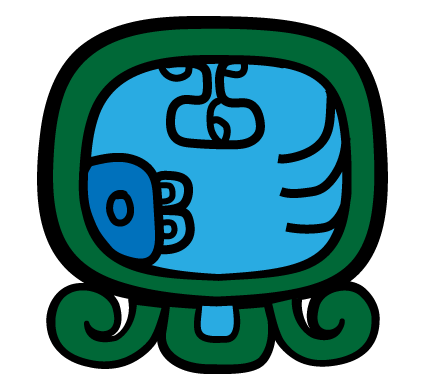
13 Kej (Ojlaju'j Kej) represents the Deer, the four pillars of the Earth, the four cardinal directions, physical authority, leadership, boundary-setting, and raw alignment with nature. Kej is the nawal of the wild leader—the warrior walking on four firm legs who uses his antlers as antennae to read the forces of the territory. Paired with the ultimate, transcendent, and complete frequency of the Number 13—Ojlaju'j, representing the thirteen primary joints of the body, the thirteen heavens, cosmic culmination, and the highest point of spiritual evolution—this sign marks the grand finale and fulfillment of the entire trecena.
To embody 13 Ojlaju'j Kej is to step out of the shadows of Xibalba and plant all four feet firmly on the living Earth as a sovereign master of your path. As the thirteenth and final step of the Tz'ikin (Eagle) trecena, this energy takes the high-altitude vision initialized at 1 Tz'ikin—which was tested through the wind (Ik'), the dark cave (Ak'ab'al), the net (K'at), the serpent (Kan), and the ancestral council (Kame)—and grounds it directly into physical reality. The Eagle has landed. The vision is no longer an abstract dream in the clouds or a ghost in the spirit world; it is an embodied, living force ready to transform the Earth.
RESEARCH
The literal meaning of the K'iche' Maya word Kej (pronounced Keh-zh with a soft 'j/zh' sound, traditionally written as Kej or Quej, and known as Manik' in Yucatec Maya) translates directly to deer, stag, or horse (in post-conquest usage).
Morphologically and symbolically in Maya linguistics and cosmovision, the root branches into three interrelated semantic layers:
The Wild Deer / Forest Guardian (Kej): The white-tailed deer (Odocoileus virginianus), the agile four-legged creature of the high forests and mountains, recognized for its sensitivity, balance, swiftness, and natural authority over the wilderness.
The Four Pillars / Four Legs (Kajib' rakan): The structural foundation. Just as the deer stands balanced on four legs, Kej represents the four cardinal directions (North, South, East, West), the four corners of the altar, the four pillars supporting the sky, and physical stability on the earth.
Beast of Burden / Transport (Kej / Kejej): In modern post-conquest Highland Maya speech, the word adapted to mean horse or mount, retaining its core identity as the strong, four-legged animal that carries weight across terrain.
Typical Uses of Kej in K'iche' / Maya Speech
In everyday Highland Maya speech, ceremonial discourse, and regional idioms, the root Kej functions across several domains:
1. Animals and Physical Terrain
Ri kej: "The deer" or "the horse" (context determines whether it refers to the forest animal or the domestic mount).
K'echelaj kej: "Wild deer" or "deer of the forest" (combining k'echelaj [forest/jungle] with kej to distinguish it from a horse).
U xik' kej: "Antlers" or "horns of the deer" (literally "wings/branches of the deer," symbolically viewed as antennae tuning into atmospheric and spiritual signals).
2. Physical Stability, Movement, and Leadership
Kajib' rakan kej: "The four legs of the deer" (a ceremonial phrase invoked when asking for physical strength, surefootedness, or balance during long journeys).
Peleq'ej kej: "To ride horseback" or "to mount a beast" (describing physical transport or taking command of a physical vehicle/situation).
Kej-al: "Firmness," "stature," or "natural dignity" (describing someone who walks with quiet authority, strong posture, and clear personal boundaries).
3. Metaphorical, Bodily & Idiomatic Expressions
K'o pa kajib' rakan: "Standing on four legs" (an idiom meaning someone is completely grounded, financially secure, or physically recovered from illness).
Uk'u'x kej: "Heart of the deer" (referring to fierce alertness, acute environmental sensitivity, and the instinct to sense danger before it arrives).
Chak pa kej: "Working like a deer/horse" (describing heavy, tireless physical labor across tough terrain).
Rebirth.
Through, in, and deep into the world of the dead can take forever. There is no time, so today we are back—in the transcendence of yesterday and its message, already into the next step. It turns out the dead are so alive, their world so living, so relevant, and so decisive over what happens in this world, that we can get lost in it. Currently, in an unwilling way, we are. We have created a world—a system, a society—that is so decrepit that it feels more sane to want to kill yourself than to stay here. A certain madness is required to stay alive against the insensitivities running rampant in this era. Luckily, everything dies, and there is no tomorrow but to be reborn from this dead stage.
If there is something to learn from the dead and from the elders, it's that death is granted—life isn't. Today's Deer is the king of the forest, the wise spirit of the woods, the entity and guardian of all that is living, and he is speaking. He’s been through death and came back; he knows what comes after, and this is his message: to live. Allow me to translate: we do things for the eternity of them, knowing that what matters is what remains, overlooking what doesn't—and that is life. Bringing ourselves into the present, being reborn into the now, means putting yourself together in front of the mirror of dharma and seeing what it is that you are doing for this living life, for the world that is living, for nature and Mother Earth, and for your own vessel—your body.
Staying a slave, or staying comfortable, is eating you from the inside. Not changing everything that is wrong makes your life a hell. To all the messages that say we can't change what is wrong in this world, ancient as they are, they are wrong. There are dirty bastards in the world of the dead; ancient and wise as they may seem, they too can be profoundly wrong. The conclusion of the Eagle is the effective possibility that does exist—unseen, unrecognized, unborn—that this world has a future, a purpose, and that there is life after this death. All the problems of the world can be solved and will be solved, and they only require you to take a look at yourself and realize: you are the mirror of everything external. Transform yourself, and the world will come with you.
13 Kej (Ojlaju'j Kej) represents the Deer, the four pillars of the Earth, the four cardinal directions, physical authority, leadership, boundary-setting, and raw alignment with nature. Kej is the nawal of the wild leader—the warrior walking on four firm legs who uses his antlers as antennae to read the forces of the territory. Paired with the ultimate, transcendent, and complete frequency of the Number 13—Ojlaju'j, representing the thirteen primary joints of the body, the thirteen heavens, cosmic culmination, and the highest point of spiritual evolution—this sign marks the grand finale and fulfillment of the entire trecena.
To embody 13 Ojlaju'j Kej is to step out of the shadows of Xibalba and plant all four feet firmly on the living Earth as a sovereign master of your path. As the thirteenth and final step of the Tz'ikin (Eagle) trecena, this energy takes the high-altitude vision initialized at 1 Tz'ikin—which was tested through the wind (Ik'), the dark cave (Ak'ab'al), the net (K'at), the serpent (Kan), and the ancestral council (Kame)—and grounds it directly into physical reality. The Eagle has landed. The vision is no longer an abstract dream in the clouds or a ghost in the spirit world; it is an embodied, living force ready to transform the Earth.
RESEARCH
The literal meaning of the K'iche' Maya word Kej (pronounced Keh-zh with a soft 'j/zh' sound, traditionally written as Kej or Quej, and known as Manik' in Yucatec Maya) translates directly to deer, stag, or horse (in post-conquest usage).
Morphologically and symbolically in Maya linguistics and cosmovision, the root branches into three interrelated semantic layers:
-
The Wild Deer / Forest Guardian (Kej): The white-tailed deer (Odocoileus virginianus), the agile four-legged creature of the high forests and mountains, recognized for its sensitivity, balance, swiftness, and natural authority over the wilderness.
-
The Four Pillars / Four Legs (Kajib' rakan): The structural foundation. Just as the deer stands balanced on four legs, Kej represents the four cardinal directions (North, South, East, West), the four corners of the altar, the four pillars supporting the sky, and physical stability on the earth.
-
Beast of Burden / Transport (Kej / Kejej): In modern post-conquest Highland Maya speech, the word adapted to mean horse or mount, retaining its core identity as the strong, four-legged animal that carries weight across terrain.
Typical Uses of Kej in K'iche' / Maya Speech
In everyday Highland Maya speech, ceremonial discourse, and regional idioms, the root Kej functions across several domains:
1. Animals and Physical Terrain
-
Ri kej: "The deer" or "the horse" (context determines whether it refers to the forest animal or the domestic mount).
-
K'echelaj kej: "Wild deer" or "deer of the forest" (combining k'echelaj [forest/jungle] with kej to distinguish it from a horse).
-
U xik' kej: "Antlers" or "horns of the deer" (literally "wings/branches of the deer," symbolically viewed as antennae tuning into atmospheric and spiritual signals).
2. Physical Stability, Movement, and Leadership
-
Kajib' rakan kej: "The four legs of the deer" (a ceremonial phrase invoked when asking for physical strength, surefootedness, or balance during long journeys).
-
Peleq'ej kej: "To ride horseback" or "to mount a beast" (describing physical transport or taking command of a physical vehicle/situation).
-
Kej-al: "Firmness," "stature," or "natural dignity" (describing someone who walks with quiet authority, strong posture, and clear personal boundaries).
3. Metaphorical, Bodily & Idiomatic Expressions
-
K'o pa kajib' rakan: "Standing on four legs" (an idiom meaning someone is completely grounded, financially secure, or physically recovered from illness).
-
Uk'u'x kej: "Heart of the deer" (referring to fierce alertness, acute environmental sensitivity, and the instinct to sense danger before it arrives).
-
Chak pa kej: "Working like a deer/horse" (describing heavy, tireless physical labor across tough terrain).