Círculo de palabra
12 Kemee

Citando a Julian Katari del 23/04/2025, 10:20 am
It's there
In the race of the flesh, the ending and the what to eat, is always worrisome. Our minds play this game too wondering what our destiny is, where we should go or what should it be. What we think or don't think, what judgment should we pass. It's all just entertainment. Seeing far ahead is the way of the eagle, having the vision, yet all we can really see is what is here, in front, what's next. The world's greatest mysteries, the deep caves of the earth, are not endless, they are what we know, we can see, with light or with darkness, but it's all just here. We don't know only because we choose to. You can enter those caves, explore; you will be walking the path to know more, to build on what is not here for you, it's there.
The almost orgasmic pleasure of being about to cum, is the pleasure of almost getting there, and then you get there and that pleasure is gone. Then the pleasure of not having the desire settles in, you're there, you did it. To some these days may have worn you out, and then today you just go about your day, doing what you know you need to do. At least you know, it's there. You don't rely on pleasure or inspiration, when the spirit is there. You can just be a dead man walking, knowing what to do, what to say; you're there for others, and that's the point of being here.

It's there
In the race of the flesh, the ending and the what to eat, is always worrisome. Our minds play this game too wondering what our destiny is, where we should go or what should it be. What we think or don't think, what judgment should we pass. It's all just entertainment. Seeing far ahead is the way of the eagle, having the vision, yet all we can really see is what is here, in front, what's next. The world's greatest mysteries, the deep caves of the earth, are not endless, they are what we know, we can see, with light or with darkness, but it's all just here. We don't know only because we choose to. You can enter those caves, explore; you will be walking the path to know more, to build on what is not here for you, it's there.
The almost orgasmic pleasure of being about to cum, is the pleasure of almost getting there, and then you get there and that pleasure is gone. Then the pleasure of not having the desire settles in, you're there, you did it. To some these days may have worn you out, and then today you just go about your day, doing what you know you need to do. At least you know, it's there. You don't rely on pleasure or inspiration, when the spirit is there. You can just be a dead man walking, knowing what to do, what to say; you're there for others, and that's the point of being here.
Citando a Julian Katari del 08/01/2026, 5:43 pmFeeling.
We have been told and taught from past nawals and from extensive wise teachings about not being taken over our emotions and using our intellect and minds to understand what is happening instead of acting impulsively from our feelings. Today's nawal like many other nawals show us that there is always another side to every wise teaching.
If we are to be warriors of spirit we must learn to always find the path in the middle, to stay balanced between what may seem to ideas, two options and even two paths. This is very difficult, but it's the way.
Having this wisdom we can receive today's advice from the nawal that connects us very strongly and very clearly with a deep connection of feeling. This is a day when that feeling you may have with someone is going to climax. It is meant to show us the line, the difference between an emotion created inside of us and by us, and actually feeling what another person and other people are feeling. We are all connected and that feeling is not a product of your imagination or your mind.
We today can access this dimension with clarity and communicate with those beings that we have feelings to. We can tell them to be in peace as we are present, and they have the same place in our hearts. What happens outside is not determinant to what happens inside. Inside, other things, many others, can happen. Time limits us but this should not limit spirit. That's why we have shamanism, because we need to give space to all the other manifestations that don't quite find their material time and space in the now to exist.
Beyond individuals, we all connect today to all of our ancestry and to the core spirit of the living and the dead. This connection and feeling should lead us to overcome our blockages and challenges in the coming times. It may look difficult and hopeless on the outside, but from the inside if we develop this connection and communication we should eventually be able to all connect and simply feel the transformation we must allow in order to reach that state of peace we strive for as a living community.
Feeling.
We have been told and taught from past nawals and from extensive wise teachings about not being taken over our emotions and using our intellect and minds to understand what is happening instead of acting impulsively from our feelings. Today's nawal like many other nawals show us that there is always another side to every wise teaching.
If we are to be warriors of spirit we must learn to always find the path in the middle, to stay balanced between what may seem to ideas, two options and even two paths. This is very difficult, but it's the way.
Having this wisdom we can receive today's advice from the nawal that connects us very strongly and very clearly with a deep connection of feeling. This is a day when that feeling you may have with someone is going to climax. It is meant to show us the line, the difference between an emotion created inside of us and by us, and actually feeling what another person and other people are feeling. We are all connected and that feeling is not a product of your imagination or your mind.
We today can access this dimension with clarity and communicate with those beings that we have feelings to. We can tell them to be in peace as we are present, and they have the same place in our hearts. What happens outside is not determinant to what happens inside. Inside, other things, many others, can happen. Time limits us but this should not limit spirit. That's why we have shamanism, because we need to give space to all the other manifestations that don't quite find their material time and space in the now to exist.
Beyond individuals, we all connect today to all of our ancestry and to the core spirit of the living and the dead. This connection and feeling should lead us to overcome our blockages and challenges in the coming times. It may look difficult and hopeless on the outside, but from the inside if we develop this connection and communication we should eventually be able to all connect and simply feel the transformation we must allow in order to reach that state of peace we strive for as a living community.
Citando a Julian Katari del 25/09/2026, 3:02 pmOther world.
The liberating snake pushes us to skid off our decency and let the beast of rage or desire loose. Inevitably, this energy has moved us—and it has so moved the earth—that today we find ourselves in that other world where that eruption carried us. It may be a world completely different, where an unyielding event altered your timeline forever, or you might find yourself in the exact same physical space and routine, but with an entirely altered connection to the invisible realm. The other world is not a distant, abstract dimension; it is right here. It is that eternal stratum where nothing truly dies—where everything that has ever existed, lived, and passed away remains anchored in truth.
We are invited by today's nawal to cross this threshold: to live from this realm, to acknowledge its presence, and to realize that it is for and by this other world—this domain of spirits and ancestors—that we navigate our physical life. Without this anchor, we would possess no orientation; we would be utterly lost in the void. The same principle applies to our elders, whom today's nawal seeks to honor and elevate into our conscious awareness.
In a decayed society that profits from the intentional erosion of human vitality—where populations are subjected to cognitive deadeners to normalize the image of an elder as a decrepit, irrelevant burden—the natural chain of wisdom is severed, breeding a mindless, purpose-less populace. This degradation exists only inside the industrialized bubble. Outside of it, elders remain the living compass without whom we cannot chart a path or understand our existence. We are called to look around and identify who among us holds this lineage. It is not a matter of chronological age—a true elder may be chronologically young, yet carry the ancestral memory, the spiritual connection, and the sight that bridges us to the realm of spirits, making them an inextinguishable fountain of truth.
Often, it is not until they pass into the unseen—and many great minds depart before us—that we recognize their weight, having squandered our access to them out of youthful arrogance. Your physical vessel will not endure indefinitely. If you fail to recognize, honor, and seek out the true elders, you will remain spiritually infantile forever—dying as someone whose presence was never truly integrated, and whose absence leaves no void.
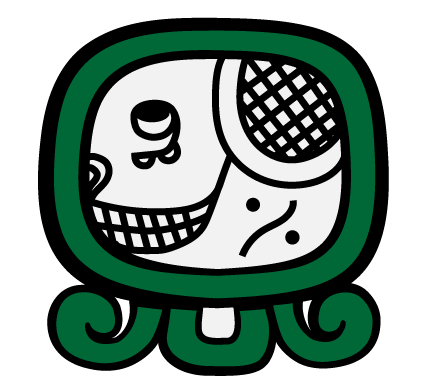
Kame (Death) represents death, transformation, the ancestors, the realm of the unseen, rebirth, ultimate harmony, and the ancestral line. Kame is the nawal of the underworld (Xibalba), the portal between life and death, the peaceful resolution of cycles, and the accumulated wisdom of all who walked before us. Paired with the expansive, synthesizing, and collective frequency of the Number 12—the energy of Kab'laju'j, representing the twelve pillars of the cosmos, the accumulation of life experiences, family and ancestral lineage, and the full consolidation of energy before final completion—this sign acts as a powerful council of the dead within the trecena.
To embody Kab'laju'j Kame is to sit at the feet of the ancestors and allow the illusions of the temporary ego to die. Positioned as the twelfth step of the Tz'ikin trecena—directly following the raw, instinctual explosion of 11 Kan—this energy takes the cleared atmosphere left by the serpent and opens the door to the ancestral lodge. It demands that you stop living solely for the fleeting immediate present, honor the lineage that forged your breath, and align your life's work with the timeless wisdom of the spirits who guard the flight of the Eagle.
RESEARCH
In Aymara, Amaypacha (from amaya meaning "ancestor", "ghost", or "deceased", and pacha meaning "time-space", "world", or "realm") refers to the world of the ancestors, the spirit realm, or the unseen dimension of the dead.
In Kʼicheʼ Maya, the most precise conceptual and cultural equivalent for this ancestral spirit world is Xibalba or Xibalbaʼ.
Here is how Kʼicheʼ terms map onto the concept of Amaypacha:
1. Xibalbaʼ (The Ancestral / Underworld Realm)
Context: In Classical and modern Kʼicheʼ cosmology (as documented in the Popol Vuh), Xibalbaʼ is the underworld and spirit dimension where the ancestors dwell, testing and transforming the soul.
Meaning: While often translated post-conquest as "hell," in indigenous Maya cosmology it is the unseen, subterranean realm of the dead and ancestors—making it the closest direct counterpart to Amaypacha.
2. Rochoch Kʼamuj or Rochoch Qʼequm (The House of Shadow / Darkness)
Breakdown:
Rochoch = "Its home/realm"
Kʼamuj / Qʼequm = "Shadow" / "Darkness"
Context: Descriptive phrases used in traditional Kʼicheʼ ritual speech (cholqʼij / chʼabʼal) to refer to the invisible dimension where spirit ancestors reside.
3. Qʼazitabal / Kʼexil (The Realm of Remembrance and Heritage)
Breakdown: Rooted in Kʼex (substitution, lineage, spiritual transformation through generations).
Context: If emphasizing Amaypacha as the domain of ancestral memory, Kʼex represents the continuity between the ancestors in the spirit world and the living line.
Summary Direct Equivalent
If you need a single, recognized Kʼicheʼ word that mirrors the cosmological weight of Amaypacha as the world of the ancestors, Xibalbaʼ is the primary term.
The K'iche' Maya word Kame (also spelled Kemee, Kame', or Came in traditional orthographies, and known as Cimi in Yucatec Maya) translates directly to death, the deceased, or the act of dying.
Morphologically, semantically, and spiritually, Kame is not merely an endpoint; it is the ultimate principle of transformation, ancestral continuity, regeneration, and the quiet authority of the invisible realm.
1. Etymology and Linguistic Structure
The noun Kame originates directly from the active verbal root for dying:
Kam-/Kamik(Verbal Root): To die, to perish, to cease physical animation, or to undergo a profound metamorphosis.
Kam-i-naq(Participial Adjective/Noun): "The deceased," "the dead person," or "that which has died."
Kam-e/Kam-el(Abstract/Agentive Form): The personification of death, the state of mortality, or the guardian entity of the threshold.2. Semantic Domains & Practical Uses in K'iche' Speech
In everyday Highland Maya speech, ceremonial discourse, and oral tradition, the root Kam operates across several distinct domains:
A. Literal and Biological Uses
Kamik: "To die" or "death" as a natural process (e.g., Xkam ri tz'i' = "The dog died").
Kaminaq: "Deceased" or "the dead" (used respectfully when referring to loved ones who have passed, e.g., Ri qakaminaqib' = "Our ancestors / our departed ones").
Kamizabal / Kamisab'al: "Poison," "weapon," or "instrument of death" (literally, "the tool for causing death").
Kamisanik: "To kill," "to slaughter," or "to extinguish" (e.g., Kamisaj ri q'aq' = "Extinguish / kill the fire").
B. Medical and Physiological Metaphors
Because Kam represents a loss or radical shift in physical animation, it describes extreme physical conditions:
Kaminik: "Numbness" or "paralysis" (literally, "a localized state of death" in a limb or muscle).
Kaminaq u'k'u'x: "Fainted," "unconscious," or "grief-stricken" (literally, "dead-hearted" or "dead in the center").
Kamisaj ri k'ax: "Kill the pain" (used when administering medicine or remedies to soothe physical suffering).
C. Ceremonial, Ancestral & Cosmological Phrases
In ritual contexts (kotz'i'j), Kame elevates from physical death to the guardian force of the ancestors and the underworld (Xibalba):
Ri Rajaw Kame: "The Lord/Owner of Death" (the sovereign entity guarding the threshold between worlds).
Uk'u'x Kaminaqib': "The Heart/Essence of the Ancestors" (invoked when placing offerings of pom copal, candles, and liquor at the altar).
Jalbal K'aslem / Jalbal Kame: "The shift of life / the shift of death" (a ceremonial diphrasitism describing reincarnation, inheritance, or generational succession).
U xib'alb'a kame: "The underworld threshold" (the subterranean realm where souls are refined and tested before rebirth).
3. Core Symbolic Principles in Cosmovision
Rebirth and Soil Fertilization: In Maya agriculture, death is the prerequisite for life. Maize must fall into the dark earth, rot, and die (kame) so that the young sprout (K'at / Aj) can break through the soil. Kame is the dark soil of transformation.
Ancestral Memory & Lineage: Kame governs the ancestral council. An individual who walks with Kame does not stand alone; they walk with the collective weight, vision, and authority of their entire bloodline.
Peace, Resolution, and ultimate Harmony: Kame is the ultimate untangler of conflict. It brings a peaceful end to terminal sickness, unsustainable struggles, and rigid ego constructs, restoring absolute stillness so a new cycle can begin.
Other world.
The liberating snake pushes us to skid off our decency and let the beast of rage or desire loose. Inevitably, this energy has moved us—and it has so moved the earth—that today we find ourselves in that other world where that eruption carried us. It may be a world completely different, where an unyielding event altered your timeline forever, or you might find yourself in the exact same physical space and routine, but with an entirely altered connection to the invisible realm. The other world is not a distant, abstract dimension; it is right here. It is that eternal stratum where nothing truly dies—where everything that has ever existed, lived, and passed away remains anchored in truth.
We are invited by today's nawal to cross this threshold: to live from this realm, to acknowledge its presence, and to realize that it is for and by this other world—this domain of spirits and ancestors—that we navigate our physical life. Without this anchor, we would possess no orientation; we would be utterly lost in the void. The same principle applies to our elders, whom today's nawal seeks to honor and elevate into our conscious awareness.
In a decayed society that profits from the intentional erosion of human vitality—where populations are subjected to cognitive deadeners to normalize the image of an elder as a decrepit, irrelevant burden—the natural chain of wisdom is severed, breeding a mindless, purpose-less populace. This degradation exists only inside the industrialized bubble. Outside of it, elders remain the living compass without whom we cannot chart a path or understand our existence. We are called to look around and identify who among us holds this lineage. It is not a matter of chronological age—a true elder may be chronologically young, yet carry the ancestral memory, the spiritual connection, and the sight that bridges us to the realm of spirits, making them an inextinguishable fountain of truth.
Often, it is not until they pass into the unseen—and many great minds depart before us—that we recognize their weight, having squandered our access to them out of youthful arrogance. Your physical vessel will not endure indefinitely. If you fail to recognize, honor, and seek out the true elders, you will remain spiritually infantile forever—dying as someone whose presence was never truly integrated, and whose absence leaves no void.
Kame (Death) represents death, transformation, the ancestors, the realm of the unseen, rebirth, ultimate harmony, and the ancestral line. Kame is the nawal of the underworld (Xibalba), the portal between life and death, the peaceful resolution of cycles, and the accumulated wisdom of all who walked before us. Paired with the expansive, synthesizing, and collective frequency of the Number 12—the energy of Kab'laju'j, representing the twelve pillars of the cosmos, the accumulation of life experiences, family and ancestral lineage, and the full consolidation of energy before final completion—this sign acts as a powerful council of the dead within the trecena.
To embody Kab'laju'j Kame is to sit at the feet of the ancestors and allow the illusions of the temporary ego to die. Positioned as the twelfth step of the Tz'ikin trecena—directly following the raw, instinctual explosion of 11 Kan—this energy takes the cleared atmosphere left by the serpent and opens the door to the ancestral lodge. It demands that you stop living solely for the fleeting immediate present, honor the lineage that forged your breath, and align your life's work with the timeless wisdom of the spirits who guard the flight of the Eagle.
RESEARCH
In Aymara, Amaypacha (from amaya meaning "ancestor", "ghost", or "deceased", and pacha meaning "time-space", "world", or "realm") refers to the world of the ancestors, the spirit realm, or the unseen dimension of the dead.
In Kʼicheʼ Maya, the most precise conceptual and cultural equivalent for this ancestral spirit world is Xibalba or Xibalbaʼ.
Here is how Kʼicheʼ terms map onto the concept of Amaypacha:
1. Xibalbaʼ (The Ancestral / Underworld Realm)
-
Context: In Classical and modern Kʼicheʼ cosmology (as documented in the Popol Vuh), Xibalbaʼ is the underworld and spirit dimension where the ancestors dwell, testing and transforming the soul.
-
Meaning: While often translated post-conquest as "hell," in indigenous Maya cosmology it is the unseen, subterranean realm of the dead and ancestors—making it the closest direct counterpart to Amaypacha.
2. Rochoch Kʼamuj or Rochoch Qʼequm (The House of Shadow / Darkness)
-
Breakdown:
-
Rochoch = "Its home/realm"
-
Kʼamuj / Qʼequm = "Shadow" / "Darkness"
-
-
Context: Descriptive phrases used in traditional Kʼicheʼ ritual speech (cholqʼij / chʼabʼal) to refer to the invisible dimension where spirit ancestors reside.
3. Qʼazitabal / Kʼexil (The Realm of Remembrance and Heritage)
-
Breakdown: Rooted in Kʼex (substitution, lineage, spiritual transformation through generations).
-
Context: If emphasizing Amaypacha as the domain of ancestral memory, Kʼex represents the continuity between the ancestors in the spirit world and the living line.
Summary Direct Equivalent
If you need a single, recognized Kʼicheʼ word that mirrors the cosmological weight of Amaypacha as the world of the ancestors, Xibalbaʼ is the primary term.
The K'iche' Maya word Kame (also spelled Kemee, Kame', or Came in traditional orthographies, and known as Cimi in Yucatec Maya) translates directly to death, the deceased, or the act of dying.
Morphologically, semantically, and spiritually, Kame is not merely an endpoint; it is the ultimate principle of transformation, ancestral continuity, regeneration, and the quiet authority of the invisible realm.
1. Etymology and Linguistic Structure
The noun Kame originates directly from the active verbal root for dying:
-
Kam-/Kamik(Verbal Root): To die, to perish, to cease physical animation, or to undergo a profound metamorphosis. -
Kam-i-naq(Participial Adjective/Noun): "The deceased," "the dead person," or "that which has died." -
Kam-e/Kam-el(Abstract/Agentive Form): The personification of death, the state of mortality, or the guardian entity of the threshold.
2. Semantic Domains & Practical Uses in K'iche' Speech
In everyday Highland Maya speech, ceremonial discourse, and oral tradition, the root Kam operates across several distinct domains:
A. Literal and Biological Uses
-
Kamik: "To die" or "death" as a natural process (e.g., Xkam ri tz'i' = "The dog died").
-
Kaminaq: "Deceased" or "the dead" (used respectfully when referring to loved ones who have passed, e.g., Ri qakaminaqib' = "Our ancestors / our departed ones").
-
Kamizabal / Kamisab'al: "Poison," "weapon," or "instrument of death" (literally, "the tool for causing death").
-
Kamisanik: "To kill," "to slaughter," or "to extinguish" (e.g., Kamisaj ri q'aq' = "Extinguish / kill the fire").
B. Medical and Physiological Metaphors
Because Kam represents a loss or radical shift in physical animation, it describes extreme physical conditions:
-
Kaminik: "Numbness" or "paralysis" (literally, "a localized state of death" in a limb or muscle).
-
Kaminaq u'k'u'x: "Fainted," "unconscious," or "grief-stricken" (literally, "dead-hearted" or "dead in the center").
-
Kamisaj ri k'ax: "Kill the pain" (used when administering medicine or remedies to soothe physical suffering).
C. Ceremonial, Ancestral & Cosmological Phrases
In ritual contexts (kotz'i'j), Kame elevates from physical death to the guardian force of the ancestors and the underworld (Xibalba):
-
Ri Rajaw Kame: "The Lord/Owner of Death" (the sovereign entity guarding the threshold between worlds).
-
Uk'u'x Kaminaqib': "The Heart/Essence of the Ancestors" (invoked when placing offerings of pom copal, candles, and liquor at the altar).
-
Jalbal K'aslem / Jalbal Kame: "The shift of life / the shift of death" (a ceremonial diphrasitism describing reincarnation, inheritance, or generational succession).
-
U xib'alb'a kame: "The underworld threshold" (the subterranean realm where souls are refined and tested before rebirth).
3. Core Symbolic Principles in Cosmovision
-
Rebirth and Soil Fertilization: In Maya agriculture, death is the prerequisite for life. Maize must fall into the dark earth, rot, and die (kame) so that the young sprout (K'at / Aj) can break through the soil. Kame is the dark soil of transformation.
-
Ancestral Memory & Lineage: Kame governs the ancestral council. An individual who walks with Kame does not stand alone; they walk with the collective weight, vision, and authority of their entire bloodline.
-
Peace, Resolution, and ultimate Harmony: Kame is the ultimate untangler of conflict. It brings a peaceful end to terminal sickness, unsustainable struggles, and rigid ego constructs, restoring absolute stillness so a new cycle can begin.