Círculo de palabra
9 Ajmaq

Citando a Julian Katari del 03/05/2025, 1:03 pm
Breaking the old
Molding the mind has a secret, not told by modern media. This secret is that the mind resides in everything, it's everything. Out of this everything, your body uniquely is a great part of what composes your mind. Then, molding your body will mean molding your mind. Exploring deep into midnight while everyone was sleeping, in the dark and with the help of a rug, I explored the limitations of my mind found in my body. I continued this molding I've been doing where I'm able to expand my mind, train and gain understanding through the art of making movements with my body. In last night's exploration, today's nawal spoke to me and taught me the relation there is between today's combination and what I was doing, breaking the old.
After turning 26, which is 2 cycles of 13 -wisdom taught by the nahuas or mexica which I hope to have a course about later- we stop producing growth hormones and so we no longer get rejuvenated as we did before. This is when you see a young 28 year old complain about how old she is because she can't withstand the night or whatever effort like she did before. It's from here that you may grow interested, or must get interested into pushing away old age. Life and gravity -the Ruay dimension of the Andeans- will shrink you, push on you and if you do nothing, you will grow old and weak.
Curiously in this modern culture there is nothing taught about that, and we just associate as natural that when we get older, we get weaker and less physically capable. In this naturalization comes a myriad of bad energies that simply settle in the body -a mind- that is allowing them to do so. As you can see from this, the modern unwise culture is not in any way advanced, it then is the old; an old that we want to let die or be born into a new from. Letting yourself find how you've stored these old energies is a first step to letting them out of you, For this we need non-doing. How normal is it that from my bed, everyone sleeping, I crawl out, come down and without paying tribute to cronos -machine-measured-time- begin doing the weirdest movements possible. The non-doing depository in the Toltec training course is about to get a lot bigger. If we don't seriously get into non-doing, the old will catch up and swallow us into the nothing.

Breaking the old
Molding the mind has a secret, not told by modern media. This secret is that the mind resides in everything, it's everything. Out of this everything, your body uniquely is a great part of what composes your mind. Then, molding your body will mean molding your mind. Exploring deep into midnight while everyone was sleeping, in the dark and with the help of a rug, I explored the limitations of my mind found in my body. I continued this molding I've been doing where I'm able to expand my mind, train and gain understanding through the art of making movements with my body. In last night's exploration, today's nawal spoke to me and taught me the relation there is between today's combination and what I was doing, breaking the old.
After turning 26, which is 2 cycles of 13 -wisdom taught by the nahuas or mexica which I hope to have a course about later- we stop producing growth hormones and so we no longer get rejuvenated as we did before. This is when you see a young 28 year old complain about how old she is because she can't withstand the night or whatever effort like she did before. It's from here that you may grow interested, or must get interested into pushing away old age. Life and gravity -the Ruay dimension of the Andeans- will shrink you, push on you and if you do nothing, you will grow old and weak.
Curiously in this modern culture there is nothing taught about that, and we just associate as natural that when we get older, we get weaker and less physically capable. In this naturalization comes a myriad of bad energies that simply settle in the body -a mind- that is allowing them to do so. As you can see from this, the modern unwise culture is not in any way advanced, it then is the old; an old that we want to let die or be born into a new from. Letting yourself find how you've stored these old energies is a first step to letting them out of you, For this we need non-doing. How normal is it that from my bed, everyone sleeping, I crawl out, come down and without paying tribute to cronos -machine-measured-time- begin doing the weirdest movements possible. The non-doing depository in the Toltec training course is about to get a lot bigger. If we don't seriously get into non-doing, the old will catch up and swallow us into the nothing.
Citando a Julian Katari del 18/01/2026, 2:06 pmCast out.
Casting negative spells on others is a thing of immature, insensitive, unspiritual little booger eaters that think being able to do such a thing is fun. All they need is a real wizard to help the man or woman that was conjured to remove the ties and it all comes whipping back to them like a rubber band, with interest. Sadly our human society has been colonized by such unloved kin. If it's not the invisible magic, it's the very visible one, the nuclear type, tool that they burden all of life with and is so far too heavy to dispel.
We are at a time when we as eagles need to train and summon the help to cast out these forces from our living universe. Today's nawal is here to convey the message. How does this manifest in time? As puking, purging, releasing and dispelling the grose and undesired. If something alike manifests today, it's because you are aligned.
Casting out distinguishes from cursing as in it is never really directed to a person, the person is never pointed to and banned; rather, the energy, attitude, mentality or spirit that person is being taken by. If we tie people to their identity or attitude with unbreakable steel strands, then we are cursed by the impossibility for real improvement, as we can't really kick out anyone out of this planet. For a moment they may need to be sent somewhere else for the health of the rest. If done with love and not through cursing, if we understand and integrate the animist perspective, then we might effectively cast out the undesired from our bodies.
Cast out.
Casting negative spells on others is a thing of immature, insensitive, unspiritual little booger eaters that think being able to do such a thing is fun. All they need is a real wizard to help the man or woman that was conjured to remove the ties and it all comes whipping back to them like a rubber band, with interest. Sadly our human society has been colonized by such unloved kin. If it's not the invisible magic, it's the very visible one, the nuclear type, tool that they burden all of life with and is so far too heavy to dispel.
We are at a time when we as eagles need to train and summon the help to cast out these forces from our living universe. Today's nawal is here to convey the message. How does this manifest in time? As puking, purging, releasing and dispelling the grose and undesired. If something alike manifests today, it's because you are aligned.
Casting out distinguishes from cursing as in it is never really directed to a person, the person is never pointed to and banned; rather, the energy, attitude, mentality or spirit that person is being taken by. If we tie people to their identity or attitude with unbreakable steel strands, then we are cursed by the impossibility for real improvement, as we can't really kick out anyone out of this planet. For a moment they may need to be sent somewhere else for the health of the rest. If done with love and not through cursing, if we understand and integrate the animist perspective, then we might effectively cast out the undesired from our bodies.
Citando a Julian Katari del 05/10/2026, 1:04 pmOutcast.
As much as we might wish the artificial council and its system were outcast from the natural world, they are not. Good and evil operate as opposing, complementary dynamics. Within the narrative, they present as a mortal duel; stepping slightly outside the narrative reveals them as the fundamental dual engine of creation at play. Pursuing this path—deciphering the code of the nawals—is viewed by some as a transgression, much as a dogmatic mind would frame it. Unveiling what lies hidden, stripping away the veil, probing the unknowable, and crossing into the spirit world wraps us in the primal darkness of the mother cosmos as we ignite into a light within it. Bringing this light into form is the literal translation of lucifer—the light-bearer—and trapped by the literal story as so many are, most will instinctively recoil from it.
The unmistakable sign that you carry this light is that you are effectively outcast by those who refuse to bear it—or even behold it. This is the burden that can feel heavy and dark. Fully embracing it demands acceptance and embodiment; that is the core invitation of today's nawal. Yet this state is not achieved by wearing a costume or performing eccentricity. Being a true bearer of light requires us to mature into a more lucid, grounded, and genuinely loving energy—rooted in the natural world, outcast from the synthetic, the performative, and all that is genuinely parasitic. Toxic positivity, superficial love, and spiritual play-acting are merely mirrors of the darkness outside and within. Engaging in that theater will not serve you where this seed is taking root.
As the tree extends its reach, the council pinpoints where toxic deposits and stagnant layers lie buried deep within the earth. The council recognizes that this toxicity was generated here—and that there is no magical "elsewhere" to banish it to. Botanical life has evolved, and continues to evolve, the capacity to slowly remediate that which is poisonous. Because the council holds the complete picture, it encompasses you and every living entity within its scope. Some plants may perish and others will endure intoxication, but over time the soil will be purified so that the future forest can thrive cleanly.
Yet as a human, you are not a plant. As much as you might try to play tough, remaining in a toxic environment while longing for acceptance and love, you must eventually walk into voluntary exile to liberate yourself from that negativity. This step is indispensable to your evolution: accepting exile, accepting being outcast, withdrawing, and descending into the generative dark—so that your light may truly sprout.
Sinner (Ajmaq) represents the profound wisdom of the ancestors, the capacity to sweeten errors, clear karmic debts, and reconcile human frailty with divine law. It is the nawal of deep introspection, the shadow side where mistakes are not condemned, but processed into wisdom and composted into fertile soil. In its ninth position (B'elejeb'), it carries the expansive, generative, and unifying force of the feminine principle, completion, and the deep emotional intuition required to embrace totality without judgment.
To embody Nine Ajmaq is to step into the role of the ultimate reconciler. It demands the strength to look directly at historical, systemic, and personal toxicity—the density of human errors—without becoming bitter or reactive. At this stage of the wave, Ajmaq brings the gentleness and maturity needed to handle the burden of being an outcast. It reminds us that forgiveness is not naive condonation, but an act of spiritual mastery that releases us from the debt of the past, allowing the light held in the dark womb of the cosmos to fully illuminate the path forward.
RESEARCH.
1. Ajmaq (Highland Maya / K'iche')
In Highland Mayan languages, Ajmaq (pronounced Ach-mak with a glottalized final consonant) is the 16th day sign of the Cholq'ij cycle. It is the nawal of human frailty, error, ancestral debt, forgiveness, shadow work, and sweet reconciliation.
Epigraphy & Morphological Structure
Aj- (Agentive Prefijo): "Person of," "master of," or "one who carries/possesses" (e.g., Aj-ij = daykeeper; Aj-itz = practitioner of shadow arts).
Maq / Mak (Noun Root): Error, fault, missing the mark, transgression, debt, or darkness.
Aj-maq (Literal Translation): "The one who misses the mark," "the debtor/transgressor," or metaphorically, "the human being" (since to be human in Mesoamerican thought is inherently to be prone to error).
Etymological Link: Linked to the concept of Mak-ik (to cover, veil, or seal), referring to that which is kept hidden in darkness or underground until brought to light for cleansing.
Core & Literal Meanings
Human Imperfection & Karma: Ajmaq represents the inherent vulnerabilities, oversights, and missteps that occur throughout human experience.
The Ancestral Lineage & The Owl (Tukur): Associated with the ancestors (Ri Ojer Winaq) and the owl, the nocturnal bird that hears and sees in complete darkness, acting as a messenger between realms.
Pardon, Sweetness & Reconciliation (U-k'ojlem Kab'): It is not a day of punitive condemnation, but of transmutation. It is the force that "sweetens" (kab') bitter mistakes, turning toxic history into fertile soil.
Uses in Everyday Speech (Common Language)
In everyday K'iche' speech, Mak and its derivatives function in social, moral, and legal contexts:
1. Moral & Social Transactions
Mak: "Fault," "mistake," or "sin/offense" (e.g., Nuk'am numak = "I accept my fault").
K'o u-mak: "He/She is at fault" or "It is their responsibility/error."
Sachal mak: "Forgiveness" or "pardon of debt" (literally: "the dropping/dissolving of the fault").
2. Colloquial Expressions
Man k'ot u-mak: "It doesn't matter," "No harm done," or "It's not a problem."
Aj-mak-el: "Mistake-prone" or "careless person."
Uses in Ceremonial, Esoteric, and Idiomatic Discourse (Specialized Language)
In ritual oratorical register (Ch'ab'al), daykeeping, and altar work:
1. Sacred & Temporal Terminology
Rajaw Ajmaq: "The Guardian Lord of Ancestors, Shadows, and Reconciliation."
Toj-mak: "Payment or restitution for errors" (the ceremonial offering brought to the altar to balance past misconduct).
Ri Tukur Ajmaq: "The Owl of Ajmaq" (symbol of night vision, ancestral wisdom, and deep listening).
2. Metaphorical & Idiomatic Expressions
U-q'olil Ajmaq: "The resin/sweetness of Ajmaq" (the spiritual balm or copal incense used to clean ancestral karma and historical guilt).
Ch'ajik mak: "The washing of faults" (a ritual bath or fire ceremony aimed at purifying emotional or spiritual toxicity).
2. K'ib' / Cib (Lowland Maya / Yucatec / Classic Epigraphy)
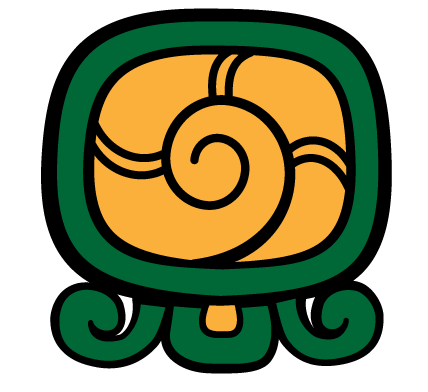
In Lowland Yucatec Maya and Classic Epigraphy (cataloged as T503 or K'IB' in Thompson's catalog), K'ib' is the corresponding 16th day sign of the Tzolkin cycle, carrying deep connections to incense, wax, illumination in darkness, and organic decay/composting.
Epigraphy & Morphological Structure
K'ib' (Classic Glyph T503): Depicted as a stylized shell, an incense burner (p'ul), or a glyph with a staircase/zigzag mark representing the descent into the underworld or the wax drips of sacred candles.
K'ib' (Noun Root in Yucatec): Wax, candle, copal resin, or rubber.
K'ib'-il (Relational Form): Illumination, tallow, or sticky protective coating.
Core & Literal Meanings
Sacred Illumination & Resin (Wax / Incense): K'ib' is the physical medium used to bring light into dark spaces—specifically beeswax candles (k'ib') and resin burnt to communicate with deities.
Organic Decay & Composting: In lowland cosmology, K'ib' represents the stage of the cycle where organic matter dies, rots, and becomes rich humus. It is the necessary breakdown that feeds new life.
Wisdom of the Crypt / Armor: Represents the protective shell or hardened exterior (like wax or a snail shell) that shields delicate internal transformation while in the underworld.
Uses in Everyday Speech (Common Language)
In Yucatec Maya, K'ib' is primarily tied to materials of light, fire, and protection:
1. Material Objects & Nature
K'ib': "Candle" or "wax" (general term used in daily speech).
Yik'el k'ib': "Beeswax" (literally: "the wax of the stingless native bee").
K'ib'-al: "To wax" or "to smear with protective resin."
Uses in Ceremonial, Esoteric, and Idiomatic Discourse (Specialized Language)
In Yucatec ritual tradition and epigraphic readings:
1. Sacred Roles & Spiritual Titles
U-tok'il k'ib': "The spark/flame of the sacred candle" (the initial invocation that pierces ritual darkness).
Muk-k'ib': "The hidden light" or "the candle burning inside the cave/tomb."
2. Metaphorical & Idiomatic Expressions
K'ib'-en-ol: "To have a steady, candle-like spirit" (referring to patient, unwavering focus amid darkness or confusion).
U-lak' k'ib': "The vessel of wax" (metaphor for the human body as a temporary container holding the divine flame).
Outcast.
As much as we might wish the artificial council and its system were outcast from the natural world, they are not. Good and evil operate as opposing, complementary dynamics. Within the narrative, they present as a mortal duel; stepping slightly outside the narrative reveals them as the fundamental dual engine of creation at play. Pursuing this path—deciphering the code of the nawals—is viewed by some as a transgression, much as a dogmatic mind would frame it. Unveiling what lies hidden, stripping away the veil, probing the unknowable, and crossing into the spirit world wraps us in the primal darkness of the mother cosmos as we ignite into a light within it. Bringing this light into form is the literal translation of lucifer—the light-bearer—and trapped by the literal story as so many are, most will instinctively recoil from it.
The unmistakable sign that you carry this light is that you are effectively outcast by those who refuse to bear it—or even behold it. This is the burden that can feel heavy and dark. Fully embracing it demands acceptance and embodiment; that is the core invitation of today's nawal. Yet this state is not achieved by wearing a costume or performing eccentricity. Being a true bearer of light requires us to mature into a more lucid, grounded, and genuinely loving energy—rooted in the natural world, outcast from the synthetic, the performative, and all that is genuinely parasitic. Toxic positivity, superficial love, and spiritual play-acting are merely mirrors of the darkness outside and within. Engaging in that theater will not serve you where this seed is taking root.
As the tree extends its reach, the council pinpoints where toxic deposits and stagnant layers lie buried deep within the earth. The council recognizes that this toxicity was generated here—and that there is no magical "elsewhere" to banish it to. Botanical life has evolved, and continues to evolve, the capacity to slowly remediate that which is poisonous. Because the council holds the complete picture, it encompasses you and every living entity within its scope. Some plants may perish and others will endure intoxication, but over time the soil will be purified so that the future forest can thrive cleanly.
Yet as a human, you are not a plant. As much as you might try to play tough, remaining in a toxic environment while longing for acceptance and love, you must eventually walk into voluntary exile to liberate yourself from that negativity. This step is indispensable to your evolution: accepting exile, accepting being outcast, withdrawing, and descending into the generative dark—so that your light may truly sprout.
Sinner (Ajmaq) represents the profound wisdom of the ancestors, the capacity to sweeten errors, clear karmic debts, and reconcile human frailty with divine law. It is the nawal of deep introspection, the shadow side where mistakes are not condemned, but processed into wisdom and composted into fertile soil. In its ninth position (B'elejeb'), it carries the expansive, generative, and unifying force of the feminine principle, completion, and the deep emotional intuition required to embrace totality without judgment.
To embody Nine Ajmaq is to step into the role of the ultimate reconciler. It demands the strength to look directly at historical, systemic, and personal toxicity—the density of human errors—without becoming bitter or reactive. At this stage of the wave, Ajmaq brings the gentleness and maturity needed to handle the burden of being an outcast. It reminds us that forgiveness is not naive condonation, but an act of spiritual mastery that releases us from the debt of the past, allowing the light held in the dark womb of the cosmos to fully illuminate the path forward.
RESEARCH.
1. Ajmaq (Highland Maya / K'iche')
In Highland Mayan languages, Ajmaq (pronounced Ach-mak with a glottalized final consonant) is the 16th day sign of the Cholq'ij cycle. It is the nawal of human frailty, error, ancestral debt, forgiveness, shadow work, and sweet reconciliation.
Epigraphy & Morphological Structure
-
Aj- (Agentive Prefijo): "Person of," "master of," or "one who carries/possesses" (e.g., Aj-ij = daykeeper; Aj-itz = practitioner of shadow arts).
-
Maq / Mak (Noun Root): Error, fault, missing the mark, transgression, debt, or darkness.
-
Aj-maq (Literal Translation): "The one who misses the mark," "the debtor/transgressor," or metaphorically, "the human being" (since to be human in Mesoamerican thought is inherently to be prone to error).
-
Etymological Link: Linked to the concept of Mak-ik (to cover, veil, or seal), referring to that which is kept hidden in darkness or underground until brought to light for cleansing.
Core & Literal Meanings
-
Human Imperfection & Karma: Ajmaq represents the inherent vulnerabilities, oversights, and missteps that occur throughout human experience.
-
The Ancestral Lineage & The Owl (Tukur): Associated with the ancestors (Ri Ojer Winaq) and the owl, the nocturnal bird that hears and sees in complete darkness, acting as a messenger between realms.
-
Pardon, Sweetness & Reconciliation (U-k'ojlem Kab'): It is not a day of punitive condemnation, but of transmutation. It is the force that "sweetens" (kab') bitter mistakes, turning toxic history into fertile soil.
Uses in Everyday Speech (Common Language)
In everyday K'iche' speech, Mak and its derivatives function in social, moral, and legal contexts:
1. Moral & Social Transactions
-
Mak: "Fault," "mistake," or "sin/offense" (e.g., Nuk'am numak = "I accept my fault").
-
K'o u-mak: "He/She is at fault" or "It is their responsibility/error."
-
Sachal mak: "Forgiveness" or "pardon of debt" (literally: "the dropping/dissolving of the fault").
2. Colloquial Expressions
-
Man k'ot u-mak: "It doesn't matter," "No harm done," or "It's not a problem."
-
Aj-mak-el: "Mistake-prone" or "careless person."
Uses in Ceremonial, Esoteric, and Idiomatic Discourse (Specialized Language)
In ritual oratorical register (Ch'ab'al), daykeeping, and altar work:
1. Sacred & Temporal Terminology
-
Rajaw Ajmaq: "The Guardian Lord of Ancestors, Shadows, and Reconciliation."
-
Toj-mak: "Payment or restitution for errors" (the ceremonial offering brought to the altar to balance past misconduct).
-
Ri Tukur Ajmaq: "The Owl of Ajmaq" (symbol of night vision, ancestral wisdom, and deep listening).
2. Metaphorical & Idiomatic Expressions
-
U-q'olil Ajmaq: "The resin/sweetness of Ajmaq" (the spiritual balm or copal incense used to clean ancestral karma and historical guilt).
-
Ch'ajik mak: "The washing of faults" (a ritual bath or fire ceremony aimed at purifying emotional or spiritual toxicity).
2. K'ib' / Cib (Lowland Maya / Yucatec / Classic Epigraphy)
In Lowland Yucatec Maya and Classic Epigraphy (cataloged as T503 or K'IB' in Thompson's catalog), K'ib' is the corresponding 16th day sign of the Tzolkin cycle, carrying deep connections to incense, wax, illumination in darkness, and organic decay/composting.
Epigraphy & Morphological Structure
-
K'ib' (Classic Glyph T503): Depicted as a stylized shell, an incense burner (p'ul), or a glyph with a staircase/zigzag mark representing the descent into the underworld or the wax drips of sacred candles.
-
K'ib' (Noun Root in Yucatec): Wax, candle, copal resin, or rubber.
-
K'ib'-il (Relational Form): Illumination, tallow, or sticky protective coating.
Core & Literal Meanings
-
Sacred Illumination & Resin (Wax / Incense): K'ib' is the physical medium used to bring light into dark spaces—specifically beeswax candles (k'ib') and resin burnt to communicate with deities.
-
Organic Decay & Composting: In lowland cosmology, K'ib' represents the stage of the cycle where organic matter dies, rots, and becomes rich humus. It is the necessary breakdown that feeds new life.
-
Wisdom of the Crypt / Armor: Represents the protective shell or hardened exterior (like wax or a snail shell) that shields delicate internal transformation while in the underworld.
Uses in Everyday Speech (Common Language)
In Yucatec Maya, K'ib' is primarily tied to materials of light, fire, and protection:
1. Material Objects & Nature
-
K'ib': "Candle" or "wax" (general term used in daily speech).
-
Yik'el k'ib': "Beeswax" (literally: "the wax of the stingless native bee").
-
K'ib'-al: "To wax" or "to smear with protective resin."
Uses in Ceremonial, Esoteric, and Idiomatic Discourse (Specialized Language)
In Yucatec ritual tradition and epigraphic readings:
1. Sacred Roles & Spiritual Titles
-
U-tok'il k'ib': "The spark/flame of the sacred candle" (the initial invocation that pierces ritual darkness).
-
Muk-k'ib': "The hidden light" or "the candle burning inside the cave/tomb."
2. Metaphorical & Idiomatic Expressions
-
K'ib'-en-ol: "To have a steady, candle-like spirit" (referring to patient, unwavering focus amid darkness or confusion).
-
U-lak' k'ib': "The vessel of wax" (metaphor for the human body as a temporary container holding the divine flame).