Círculo de palabra
11 Tijaax

Citando a Julian Katari del 05/05/2025, 2:48 pm
One layer
We are afraid of reaching or passing the limit because we know that there is a consequence for that. We associate consequence with a monotheistic concept of punishment, where if we go over, we will suffer the consequences. That depends on your perception. What happens in life, like for example when planetary limits are reached and whole species disappear or are forced into a drastic reduction of their populations, the knowledge or "evolutionary traits" they had get accounted for into the next evolutionary shift, so in a sense nothing is lost. It is not a punishment, it's a shift. In this shift there may be death and loss, but that's accounted for, and in that loss, there is great gain.
We are afraid of cutting away and letting go, but that is exactly what will allow us to grow. Growth is natural, shift is too, and it will happen to you like it or not. The difference is how prepared you are for it. Mesoamericans knew this and bloodletting rituals and other sacrifices came as a powerful way to advance oneself into a shift or change where something is lost so that a new can come. We need to shift a little more towards this attitude instead of fighting against the losses and changes in our lives.
Today's unique combination has showed in many people I've had the luck to know and has allowed me to see that this is one of the softest and less drastic of all the Tijaax out there. My reading is that a very gentle layer is taken today from us today, so exact that we feel liberated, no real challenge is presented today. The things that we are letting go of will show, in parts of your conversations, and you will get flashed by the magic that this has been happening for a long time, though we only get to realize it today.
In everything we do, we are letting go of an aspect of it we no longer wish. In living every experience, we are saying goodbye to it since it won't be back quite like that. Every experience is then unique, each cup of tea, unrepeatable. We love what we are doing, where we are, and at the same time, we are getting rid of it, living it to the fullest so that we can leave it behind and make space for something much better that is coming.

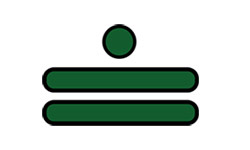
One layer
We are afraid of reaching or passing the limit because we know that there is a consequence for that. We associate consequence with a monotheistic concept of punishment, where if we go over, we will suffer the consequences. That depends on your perception. What happens in life, like for example when planetary limits are reached and whole species disappear or are forced into a drastic reduction of their populations, the knowledge or "evolutionary traits" they had get accounted for into the next evolutionary shift, so in a sense nothing is lost. It is not a punishment, it's a shift. In this shift there may be death and loss, but that's accounted for, and in that loss, there is great gain.
We are afraid of cutting away and letting go, but that is exactly what will allow us to grow. Growth is natural, shift is too, and it will happen to you like it or not. The difference is how prepared you are for it. Mesoamericans knew this and bloodletting rituals and other sacrifices came as a powerful way to advance oneself into a shift or change where something is lost so that a new can come. We need to shift a little more towards this attitude instead of fighting against the losses and changes in our lives.
Today's unique combination has showed in many people I've had the luck to know and has allowed me to see that this is one of the softest and less drastic of all the Tijaax out there. My reading is that a very gentle layer is taken today from us today, so exact that we feel liberated, no real challenge is presented today. The things that we are letting go of will show, in parts of your conversations, and you will get flashed by the magic that this has been happening for a long time, though we only get to realize it today.
In everything we do, we are letting go of an aspect of it we no longer wish. In living every experience, we are saying goodbye to it since it won't be back quite like that. Every experience is then unique, each cup of tea, unrepeatable. We love what we are doing, where we are, and at the same time, we are getting rid of it, living it to the fullest so that we can leave it behind and make space for something much better that is coming.
Citando a Julian Katari del 20/01/2026, 4:35 pmLetting go of the necessary foe.
We stand in the dead of winter, in the cold of emptiness, the abyss of a crumbling world, of a war ridden society, of mental fragmentation, zombie apocalypse is happening. We yell and shout and no one replies, yet everyone hears. Not the most beautiful words, not the most powerful revelations, not the most helpful of guidance, not the most sincere of sharing; only the shallow, vague, superficial, is entertaining and deserves reactions and friendship.
Millions of people still believe that a savior is coming. This savior has already come, has been amongst us, trying to shine through the mist, yet they are so hopelessly lost that they missed him, they are unsavable. No wonder a few satanists resolve in finding ways to exterminate y'all. But this is of their doing. Every cent taxed from us is invested in ways to deceive, confuse and control us. It is then up to us to do the work to get out of the spider webs and choose to see the sunlight.
This is a digging worm type of sun ray nawal. It is doing it's hardest trying to reach you and warm you up. It can only do so by shining light on what is around. The spiders are the ones that cocoon you with pretty fairy tales of everything is alright and we are cool. Artificial positivity is truly negative. Today's nawal represents that letting go of intent, the fall, the radical liberation from existence when we say "I'm done"!
Giving space to our worse enemy, ourselves, listening to our most negative thoughts, is a positive practice sponsored by today's unique combination. The party of the Q'aniil is almost over and this is the moment you realize that what comes next is cleaning the awful mess. There is a difference in getting caught by surprise by today's energy, or following the days and being ready for it. In the first scenario we might break apart, loose it or retreat to some unfound state. In the second scenario we sit with our internal enemy and give him some love. We listen to him and ask today's nawal for guidance.
The nawal then speaks and tells us that our negativity is not always and not fully there to mess with us. It is also here to keep us grounded, to balance us, to make sure we save some energy in the party for the cleaning after. In this energy you will find yourself if not cursing, wanting to release ties, break away, send others away or free yourself from yourself. Something is not quite right. That negative entity we were postponing, that we thought we casted out, we have to sit with it today. He/she is there for something, it has a message. Listen carefully and openly, find a way to relate positively with it. If this is accomplished, then we will be able to spot that what was truly negative for us, were our negative thoughts and ideas that were simply untrue. Our negativity is here for something. Relate to it in a loving, animistic way and you will discover the true and let go of the untrue.
Letting go of the necessary foe.
We stand in the dead of winter, in the cold of emptiness, the abyss of a crumbling world, of a war ridden society, of mental fragmentation, zombie apocalypse is happening. We yell and shout and no one replies, yet everyone hears. Not the most beautiful words, not the most powerful revelations, not the most helpful of guidance, not the most sincere of sharing; only the shallow, vague, superficial, is entertaining and deserves reactions and friendship.
Millions of people still believe that a savior is coming. This savior has already come, has been amongst us, trying to shine through the mist, yet they are so hopelessly lost that they missed him, they are unsavable. No wonder a few satanists resolve in finding ways to exterminate y'all. But this is of their doing. Every cent taxed from us is invested in ways to deceive, confuse and control us. It is then up to us to do the work to get out of the spider webs and choose to see the sunlight.
This is a digging worm type of sun ray nawal. It is doing it's hardest trying to reach you and warm you up. It can only do so by shining light on what is around. The spiders are the ones that cocoon you with pretty fairy tales of everything is alright and we are cool. Artificial positivity is truly negative. Today's nawal represents that letting go of intent, the fall, the radical liberation from existence when we say "I'm done"!
Giving space to our worse enemy, ourselves, listening to our most negative thoughts, is a positive practice sponsored by today's unique combination. The party of the Q'aniil is almost over and this is the moment you realize that what comes next is cleaning the awful mess. There is a difference in getting caught by surprise by today's energy, or following the days and being ready for it. In the first scenario we might break apart, loose it or retreat to some unfound state. In the second scenario we sit with our internal enemy and give him some love. We listen to him and ask today's nawal for guidance.
The nawal then speaks and tells us that our negativity is not always and not fully there to mess with us. It is also here to keep us grounded, to balance us, to make sure we save some energy in the party for the cleaning after. In this energy you will find yourself if not cursing, wanting to release ties, break away, send others away or free yourself from yourself. Something is not quite right. That negative entity we were postponing, that we thought we casted out, we have to sit with it today. He/she is there for something, it has a message. Listen carefully and openly, find a way to relate positively with it. If this is accomplished, then we will be able to spot that what was truly negative for us, were our negative thoughts and ideas that were simply untrue. Our negativity is here for something. Relate to it in a loving, animistic way and you will discover the true and let go of the untrue.
Citando a Julian Katari del 07/10/2026, 2:21 pmBreak.
Growth is not merely the autopoietic drive held within each seed and species that allows it to fulfill its role within the greater ecology. It is the gestation of the cosmos itself—a force that generates life and takes life through a relentless forge of transformation, adaptation, and fortitude. Time is pure motion; nothing remains static. We are the precise balance sustained within a storm of creation. Life is not at peace and never will be. Conflict is its very genesis. This is why existence is perpetually confronted with hardship, and why there is always a pressure pushing us directly to the edge.
That edge is precisely where we find ourselves under a day like this—or at least, that is what this nawal combination comes to embody. A break, then, is what we may choose. Short or long, for temporary rest or a permanent severance. Surrendering, walking away, dropping into silence, giving it the finger—it is all an integral part of the process. The seed has been buried in the soil for a while now, and no rain has fallen to make it sprout. It sits on the verge of death, or perhaps it has already died. It gave everything it had to give.
Unlike a dedicated death nawal that transitions us into an immediate rebirth or a new form, this energy represents an absolute blackout, an honest giving up, a necessary rupture or clean break. Yet as the word break implies, it carries a dual truth. As permanent as we may wish it to be, beneath its sharp, drastic, and unyielding cutting power lies the law that nothing is fixed, and therefore nothing is permanent—at least not on this living side of the cosmos. Something new is undeniably forming, but to receive it, we must first be brought to the threshold where we refuse to carry the old any longer. Whatever rupture you choose to make under the edge of this nawal, it holds its own blessing.
The Flint / Obsidian Blade / The Sacred Knife / Cleansing Rupture ( Tijax) represents the double-edged blade of cosmic law—the force that cuts away disease, deceit, and stagnation to restore fundamental truth. It is the obsidian scalpel of the healer and the warrior's blade, governing sudden endings, spiritual surgery, suffering, and the swift separation of the essential from the toxic. In its eleventh position (Ju'lajuj), it carries the dynamic, erratic, and highly transformative energy of resolution through disharmony—where accumulated tension reaches its breaking point to force a necessary shift.
To embody Eleven Tijax is to wield the blade without hesitation or self-deception. It demands the radical honesty required to make a clean cut when an environment, habit, or dynamic has run out of life. At this late stage of the trecena, Tijax acts as a cosmic circuit breaker, interrupting the slow decay of the buried seed by severing what cannot survive the coming cycle. It reminds us that walking away or letting something shatter is not always a failure; often, it is the highest act of spiritual precision—clearing the path so that what comes next is built on absolute truth.
RESEARCH
1. Tijax (Highland Maya / K'iche')
In Highland Mayan languages, Tijax (pronounced Tee-shash with a glottalized final consonant) is the 18th day sign of the Cholq'ij cycle. It is the nawal of the obsidian blade, double-edged truth, spiritual surgery, swift resolution, and the cutting away of disease or deceit.
Epigraphy & Morphological Structure
Tijax (Root Noun): Flint, obsidian, knife, or sharp instrument.
Tij / Tijoj (Verb Root Cognate): To test, to try, to instruct, or to sharpen/discipline through trial (tijonem).
Etymological Link: Tied to Tij-at-ik (to slice or cut cleanly) and Tij-onik (to teach or discipline), signaling that suffering or sharp boundaries under Tijax act as direct spiritual instruction.
Core & Literal Meanings
The Double-Edged Blade (Ch'ich'): Represents the obsidian scalpel (ch'ab') that can either heal by removing illness/tumor or wound if handled carelessly.
Abrupt Rupture & Protection: The lightning bolt or sudden strike that cuts through stagnant or toxic dynamics.
Health, Healing & Medical Precision: Associated with healers (Aj-k'omanel), bone-setters, and surgeons who use sharp tools to restore balance.
Uses in Everyday Speech (Common Language)
In everyday K'iche' and highland speech, Tijax and its root derivatives function across medical, physical, and instructional contexts:
1. Tools, Cutting & Sharp Objects
Tijax: "Flint," "obsidian," or "chert" (the material itself).
U-ti'tal tijax: "The sharp edge/blade of the stone."
Ch'ak-tijax: "To cut or slice cleanly with a sharp edge."
2. Instruction & Discipline (Related Root Tij-)
Tij-o'bal: "School" or "place of learning/discipline."
Tij-onel: "Teacher" or "instructor" (one who sharpens the mind).
Uses in Ceremonial, Esoteric, and Idiomatic Discourse (Specialized Language)
In daykeeping (Ajq'ij tradition), traditional medicine, and ceremonial prayer:
1. Sacred & Temporal Terminology
Rajaw Tijax: "The Guardian Lord of the Obsidian Blade, Healing, and Liberation."
U-ch'ab' Tijax: "The sacred arrow/scalpel of Tijax" (invoked to sever karmic ties, spiritual attack, or physical illness).
Ju'lajuj Tijax (11 Tijax): The day of radical severance, structural breakage, and necessary rupture before renewal.
2. Metaphorical & Idiomatic Expressions
Q'at-b'al tijax: "The knife of judgment" (the capacity to discern truth from illusion with absolute clarity).
Ch'aj-in Tijax: "The obsidian cleansing" (a spiritual sweep using obsidian blades or sharp leaves to cut away heavy aura or bad luck).
2. Etz'nab' / Edznab (Lowland Maya / Yucatec / Classic Epigraphy)
In Lowland Yucatec Maya and Classic Epigraphy (cataloged as T585 or ETZ'NAB' in Thompson's catalog), Etz'nab' is the corresponding 18th day sign of the Tzolkin cycle, carrying primary roots in chert, flint spearheads, mirror-like obsidian reflection, and sharp sacrifice.
Epigraphy & Morphological Structure
Etz'nab' (Classic Glyph T585): Depicted as a stylized spear point or flint knife crossed with hatching lines (chert texture), representing the sharp stone tip used in hunting, warfare, and ritual bloodletting.
Etz' / Edz (Noun/Verb Root in Yucatec): To mirror, to sharpen, to fix firmly, or to press down.
Etz'nab' (Compound Form): "The firm mirror of flint" or "the sharpening stone."
Core & Literal Meanings
Flint Spearhead & Knife: The primary physical material for elite weapons, ceremonial lancets, and butchery tools in lowland Maya culture.
The Mirror of Truth (Nen): Associated with polished obsidian mirrors that reflect the inner shadow and true state of the soul without distortion.
Decisive Separation: The physical act of severing ties, making sacrifices, and establishing unbreachable boundaries.
Uses in Everyday Speech (Common Language)
In Yucatec Maya, Etz' and related roots tie to stabilization, sharp tools, and reflection:
1. Material Objects & Actions
Etz'nab': "Flint knife" or "chert weapon."
Edz-ik: "To settle, sharpen, or fix securely in place."
Etz'-ba: "To reflect oneself" or "to look in a mirror."
Uses in Ceremonial, Esoteric, and Idiomatic Discourse (Specialized Language)
In Yucatec ritual tradition, Classic inscriptions, and codices:
1. Sacred Roles & Epigraphic Phrases
U-tok'il Etz'nab': "The flint spark" or "the ceremonial knife of the priest."
Tok' Etz'nab': "Flint sacrifice" or "the ritual cutting of blood."
2. Metaphorical & Idiomatic Expressions
U-lem-il Etz'nab': "The flash of the blade" (metaphor for sudden divine revelation or swift justice).
Etz'nab-en-ol: "A mind sharp as flint" (referring to unshakeable focus and uncompromising mental clarity).
3. Tecpatl / Tecpactl (Central Nahuatl / Aztec Cosmovision)
In Central Nahuatl and the Mexica / Aztec calendar (Tonalpohualli), Tecpatl is the 18th day sign and one of the four Year Bearers (Xihuitl), meaning sacrificial flint knife, spark of fire, cold light, and royal justice.
Morphology & Structural Symbolism
Tecpatl (Root Noun): Flint, knife, or sacrificial blade.
Tecpatl Glyph: Depicted as a stylized double-sided flint knife, often painted half red (blood/life) and half white/blue (cold stone/sky), frequently featuring teeth and a gaping jaw or eye, signifying that the blade is a living, devouring entity.
Cosmological Function: As a Year Bearer, Tecpatl governs the North (Mictlampa—the realm of the dead, cold, and ancestral memory).
Core & Literal Meanings
Sacrificial Instrument & Life-Force: Tecpatl is the knife (Iztli) used in ritual offer to release Tonalli (solar soul-energy) back to the cosmos.
Spark of Generation: Striking two tecpatl stones together creates fire; thus, it represents the hard, cold stone that conceals latent cosmic heat.
Truth, Law & Warfare: Symbolizes uncompromising legal justice, the warrior's discipline, and the courage to sever weakness.
Uses in Everyday Speech (Common Language)
In classic and spoken Nahuatl, Tecpatl appears in terms related to stone, cutting tools, and military gear:
1. Physical Materials & Weapons
Tecpatl: "Flint knife" or "dagger."
Tecpachichictli: "Flint scraper" or "stone blade."
Iztli-tecpatl: "Obsidian-flint weapon."
Uses in Ceremonial, Esoteric, and Idiomatic Discourse (Specialized Language)
In Mexica codices, statecraft, and high sacred poetry:
1. Sacred Cosmological Concepts
Tecpatl Xihuitl: "Year of the Flint" (governing periods of hardship, cold, strategic focus, and military discipline).
Mixcoatl-Tecpatl: The flint associated with the cloud-serpent deity of hunting and northern stars.
2. Metaphorical & Philosophical Expressions
In Tecpatl in Iztli: "The flint and the obsidian" (Nahuatl diphrasism for trial, war, discipline, and the cutting test of destiny).
Tle-tecpatl: "Fire-flint" (the spark of divine intelligence hidden within cold physical matter).
Break.
Growth is not merely the autopoietic drive held within each seed and species that allows it to fulfill its role within the greater ecology. It is the gestation of the cosmos itself—a force that generates life and takes life through a relentless forge of transformation, adaptation, and fortitude. Time is pure motion; nothing remains static. We are the precise balance sustained within a storm of creation. Life is not at peace and never will be. Conflict is its very genesis. This is why existence is perpetually confronted with hardship, and why there is always a pressure pushing us directly to the edge.
That edge is precisely where we find ourselves under a day like this—or at least, that is what this nawal combination comes to embody. A break, then, is what we may choose. Short or long, for temporary rest or a permanent severance. Surrendering, walking away, dropping into silence, giving it the finger—it is all an integral part of the process. The seed has been buried in the soil for a while now, and no rain has fallen to make it sprout. It sits on the verge of death, or perhaps it has already died. It gave everything it had to give.
Unlike a dedicated death nawal that transitions us into an immediate rebirth or a new form, this energy represents an absolute blackout, an honest giving up, a necessary rupture or clean break. Yet as the word break implies, it carries a dual truth. As permanent as we may wish it to be, beneath its sharp, drastic, and unyielding cutting power lies the law that nothing is fixed, and therefore nothing is permanent—at least not on this living side of the cosmos. Something new is undeniably forming, but to receive it, we must first be brought to the threshold where we refuse to carry the old any longer. Whatever rupture you choose to make under the edge of this nawal, it holds its own blessing.
The Flint / Obsidian Blade / The Sacred Knife / Cleansing Rupture ( Tijax) represents the double-edged blade of cosmic law—the force that cuts away disease, deceit, and stagnation to restore fundamental truth. It is the obsidian scalpel of the healer and the warrior's blade, governing sudden endings, spiritual surgery, suffering, and the swift separation of the essential from the toxic. In its eleventh position (Ju'lajuj), it carries the dynamic, erratic, and highly transformative energy of resolution through disharmony—where accumulated tension reaches its breaking point to force a necessary shift.
To embody Eleven Tijax is to wield the blade without hesitation or self-deception. It demands the radical honesty required to make a clean cut when an environment, habit, or dynamic has run out of life. At this late stage of the trecena, Tijax acts as a cosmic circuit breaker, interrupting the slow decay of the buried seed by severing what cannot survive the coming cycle. It reminds us that walking away or letting something shatter is not always a failure; often, it is the highest act of spiritual precision—clearing the path so that what comes next is built on absolute truth.
RESEARCH
1. Tijax (Highland Maya / K'iche')
In Highland Mayan languages, Tijax (pronounced Tee-shash with a glottalized final consonant) is the 18th day sign of the Cholq'ij cycle. It is the nawal of the obsidian blade, double-edged truth, spiritual surgery, swift resolution, and the cutting away of disease or deceit.
Epigraphy & Morphological Structure
-
Tijax (Root Noun): Flint, obsidian, knife, or sharp instrument.
-
Tij / Tijoj (Verb Root Cognate): To test, to try, to instruct, or to sharpen/discipline through trial (tijonem).
-
Etymological Link: Tied to Tij-at-ik (to slice or cut cleanly) and Tij-onik (to teach or discipline), signaling that suffering or sharp boundaries under Tijax act as direct spiritual instruction.
Core & Literal Meanings
-
The Double-Edged Blade (Ch'ich'): Represents the obsidian scalpel (ch'ab') that can either heal by removing illness/tumor or wound if handled carelessly.
-
Abrupt Rupture & Protection: The lightning bolt or sudden strike that cuts through stagnant or toxic dynamics.
-
Health, Healing & Medical Precision: Associated with healers (Aj-k'omanel), bone-setters, and surgeons who use sharp tools to restore balance.
Uses in Everyday Speech (Common Language)
In everyday K'iche' and highland speech, Tijax and its root derivatives function across medical, physical, and instructional contexts:
1. Tools, Cutting & Sharp Objects
-
Tijax: "Flint," "obsidian," or "chert" (the material itself).
-
U-ti'tal tijax: "The sharp edge/blade of the stone."
-
Ch'ak-tijax: "To cut or slice cleanly with a sharp edge."
2. Instruction & Discipline (Related Root Tij-)
-
Tij-o'bal: "School" or "place of learning/discipline."
-
Tij-onel: "Teacher" or "instructor" (one who sharpens the mind).
Uses in Ceremonial, Esoteric, and Idiomatic Discourse (Specialized Language)
In daykeeping (Ajq'ij tradition), traditional medicine, and ceremonial prayer:
1. Sacred & Temporal Terminology
-
Rajaw Tijax: "The Guardian Lord of the Obsidian Blade, Healing, and Liberation."
-
U-ch'ab' Tijax: "The sacred arrow/scalpel of Tijax" (invoked to sever karmic ties, spiritual attack, or physical illness).
-
Ju'lajuj Tijax (11 Tijax): The day of radical severance, structural breakage, and necessary rupture before renewal.
2. Metaphorical & Idiomatic Expressions
-
Q'at-b'al tijax: "The knife of judgment" (the capacity to discern truth from illusion with absolute clarity).
-
Ch'aj-in Tijax: "The obsidian cleansing" (a spiritual sweep using obsidian blades or sharp leaves to cut away heavy aura or bad luck).
2. Etz'nab' / Edznab (Lowland Maya / Yucatec / Classic Epigraphy)
In Lowland Yucatec Maya and Classic Epigraphy (cataloged as T585 or ETZ'NAB' in Thompson's catalog), Etz'nab' is the corresponding 18th day sign of the Tzolkin cycle, carrying primary roots in chert, flint spearheads, mirror-like obsidian reflection, and sharp sacrifice.
Epigraphy & Morphological Structure
-
Etz'nab' (Classic Glyph T585): Depicted as a stylized spear point or flint knife crossed with hatching lines (chert texture), representing the sharp stone tip used in hunting, warfare, and ritual bloodletting.
-
Etz' / Edz (Noun/Verb Root in Yucatec): To mirror, to sharpen, to fix firmly, or to press down.
-
Etz'nab' (Compound Form): "The firm mirror of flint" or "the sharpening stone."
Core & Literal Meanings
-
Flint Spearhead & Knife: The primary physical material for elite weapons, ceremonial lancets, and butchery tools in lowland Maya culture.
-
The Mirror of Truth (Nen): Associated with polished obsidian mirrors that reflect the inner shadow and true state of the soul without distortion.
-
Decisive Separation: The physical act of severing ties, making sacrifices, and establishing unbreachable boundaries.
Uses in Everyday Speech (Common Language)
In Yucatec Maya, Etz' and related roots tie to stabilization, sharp tools, and reflection:
1. Material Objects & Actions
-
Etz'nab': "Flint knife" or "chert weapon."
-
Edz-ik: "To settle, sharpen, or fix securely in place."
-
Etz'-ba: "To reflect oneself" or "to look in a mirror."
Uses in Ceremonial, Esoteric, and Idiomatic Discourse (Specialized Language)
In Yucatec ritual tradition, Classic inscriptions, and codices:
1. Sacred Roles & Epigraphic Phrases
-
U-tok'il Etz'nab': "The flint spark" or "the ceremonial knife of the priest."
-
Tok' Etz'nab': "Flint sacrifice" or "the ritual cutting of blood."
2. Metaphorical & Idiomatic Expressions
-
U-lem-il Etz'nab': "The flash of the blade" (metaphor for sudden divine revelation or swift justice).
-
Etz'nab-en-ol: "A mind sharp as flint" (referring to unshakeable focus and uncompromising mental clarity).
3. Tecpatl / Tecpactl (Central Nahuatl / Aztec Cosmovision)
In Central Nahuatl and the Mexica / Aztec calendar (Tonalpohualli), Tecpatl is the 18th day sign and one of the four Year Bearers (Xihuitl), meaning sacrificial flint knife, spark of fire, cold light, and royal justice.
Morphology & Structural Symbolism
-
Tecpatl (Root Noun): Flint, knife, or sacrificial blade.
-
Tecpatl Glyph: Depicted as a stylized double-sided flint knife, often painted half red (blood/life) and half white/blue (cold stone/sky), frequently featuring teeth and a gaping jaw or eye, signifying that the blade is a living, devouring entity.
-
Cosmological Function: As a Year Bearer, Tecpatl governs the North (Mictlampa—the realm of the dead, cold, and ancestral memory).
Core & Literal Meanings
-
Sacrificial Instrument & Life-Force: Tecpatl is the knife (Iztli) used in ritual offer to release Tonalli (solar soul-energy) back to the cosmos.
-
Spark of Generation: Striking two tecpatl stones together creates fire; thus, it represents the hard, cold stone that conceals latent cosmic heat.
-
Truth, Law & Warfare: Symbolizes uncompromising legal justice, the warrior's discipline, and the courage to sever weakness.
Uses in Everyday Speech (Common Language)
In classic and spoken Nahuatl, Tecpatl appears in terms related to stone, cutting tools, and military gear:
1. Physical Materials & Weapons
-
Tecpatl: "Flint knife" or "dagger."
-
Tecpachichictli: "Flint scraper" or "stone blade."
-
Iztli-tecpatl: "Obsidian-flint weapon."
Uses in Ceremonial, Esoteric, and Idiomatic Discourse (Specialized Language)
In Mexica codices, statecraft, and high sacred poetry:
1. Sacred Cosmological Concepts
-
Tecpatl Xihuitl: "Year of the Flint" (governing periods of hardship, cold, strategic focus, and military discipline).
-
Mixcoatl-Tecpatl: The flint associated with the cloud-serpent deity of hunting and northern stars.
2. Metaphorical & Philosophical Expressions
-
In Tecpatl in Iztli: "The flint and the obsidian" (Nahuatl diphrasism for trial, war, discipline, and the cutting test of destiny).
-
Tle-tecpatl: "Fire-flint" (the spark of divine intelligence hidden within cold physical matter).