Canal
Jun Keej – Return
WWe walk amid the grand gathering of the living dead—a rare and uncanny hour when the ancient spirits of the deep underworld have risen once more. Step outside into the open air and observe the civilization that built us, this vast machinery of walking corpses where survival and mere existence demand that you surrender your full radiance, your pristine spark of wholeness. This is the sacred curriculum we are taught: the systematic dulling required to blunt ourselves and those we love down to a level of compliant unconsciousness and hollow comfort. Only then are we deemed sane, normal, and fit to function within a system that manufactures only death and produces no life.
Look upon the weary elders and the disoriented youth drifting through the streets—the living dead, stripped of their smiles, yet holding enough dormant love within their chests to keep the bones from scattering. Suicide demands a terrifying courage, and true madness in this world is simply standing upside down; what the culture calls “normal” is a profound psychosis, and refusing that normality is the only sanity left. Yet even this baseline misery is not enough for the architects of decay; it is constantly researched, engineered, and driven toward darker horizons. No matter how wretched the oligarchs strive to make reality for the impoverished multitudes they manufacture, love persists within the people. They coalesce, gather, and legislate fragments of warmth to make existence bearable. They endure, and eventually, amidst every crushing obstacle, they stumble upon the doorway to remembrance and will soon organize to transform this order once and for all.
This is the nightmare that haunts the halls of the oligarchs: the realization that their engineered future—where populations are culled by the billions, as recently whispered by figures like Bill Gates, and ruled by a rogue artificial intelligence—is the final desperate gamble of a ruling psychopathy. They bet on synthetic extinction because the only alternative is the return of a world where their dominion is no more.
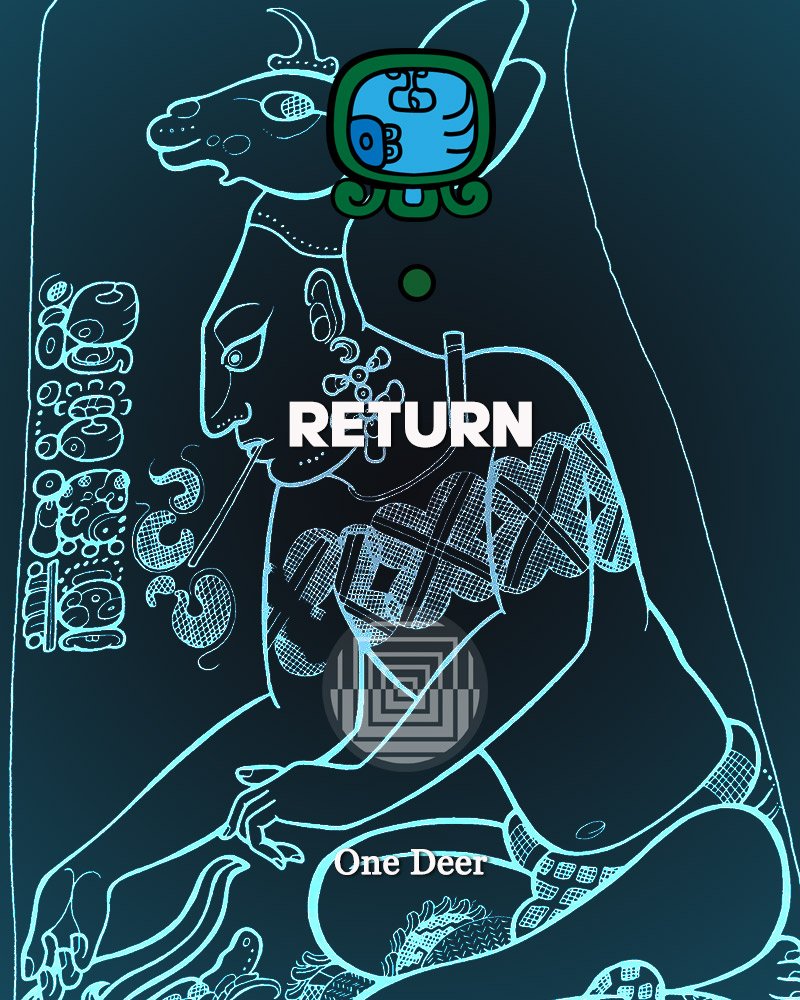
Yet we are not entirely swayed by this chillingly realistic canvas, for we are tethered to the indissoluble principle of life that remains forever wedded to death. This sacred nawal and this turning wheel capture that truth with magnificent precision. The shadow of the cave culminates in the ghostly parade of the thirteen death, where the sudden, startling revelation strikes us: we are all walking dead; this ephemeral field of breathing is so fragile that the vast, unseen realm beyond it is what truly governs and consumes all. Life is merely the delicate skin stretched across the immense body of the ancestral spirit honored yesterday.
Thus, today unfolds as a timeless return—a transcendent reclamation of this living dead world that cannot simply be abandoned, and so must be resurrected. Witness how the hidden riddles of yesterday’s nawal unveil themselves now. Return, revelation, and rebirth are the beating heart of this day and this dawning trecena. We return to what can never die, to that which has always been and always will be. We return to this direct gnosis and this living encounter. As an authentic expression of the nawal of the B’atz’ and the deep najt count, we are pulled back into contact with old bonds, abandoned habits, and former states of being. We collide once more with things and souls we thought we had outgrown, things we swore we left far behind.
Keej arrives to whisper the unyielding truth: in this grand architecture, we never truly die. Nothing is ever cleanly transcended, fully disintegrated, or permanently erased. Everything finds its way home—perhaps wearing a slightly altered mask or moving to a different rhythm, but it always returns. Nothing dissolves into absolute nothingness. It may recede into the shadows for a season, but eventually we circle back to it, and this very day and trecena may well unseal that portal for you. The grand gathering, the great feast, and the return to a healthier, more complete, and balanced state require the radical acceptance that whatever was once broken, toxic, or diseased will always linger at the edges, will always return, and will always demand another reckoning.
Right relation is never found in fleeing, transcending, or violently severing oneself from what is corrupted and painful—it is not an escape into a sterile field of non-existence. Rather, right relation is the active elevation and redemption of the bond, the integration of that which was fractured. It begins with the awakening realization that nothing ever truly vanishes, that all things continuously cycle through death and rebirth, and that they return to sacred harmony the moment we have the courage to allow it.
This is the exact threshold where, regardless of our exhaustion as the walking dead, our final-hour agonies, our depleted resources, and our enduring scars, we must ignite the flame of sheer gratitude for being alive. We must unearth the love that still drives our steps and celebrate it fiercely. Stepping into this active sovereignty means becoming a healer—one who does not turn their back on troubled kin and broken neighbors because of the suffering they inflict, but who relentlessly carves out a way to transmute that darkness and bring the vital medicine the situation requires.
For the collective world, the pattern mirrors our own. The architects of dystopia will push their automated cages as far as breath allows, seeking to subjugate and consume us so we never rise against them—until the moment we do. And turning upon them means stepping fully into the living presence of the healer, refusing to remain silent any longer. You stop fleeing and sweeping your grief beneath the rug when you perceive that every difficult relationship, every avoided face, is anchored there by love. Love is the singular, unbreakable thread holding this entire fragile tapestry together, and the choice is ours: to act with its power and restore a state of grace, or to remain bound by its silent weight while awaiting the great return of death to offer us a cleaner slate.
The Deer / The Four Pillars / The Support / The Staff of Authority (Keej) represents the four sacred directions, the pillars of the world, the spiritual authority that carries the weight of community, the guardian of nature, and the vital force that walks through the wilderness with grace and endurance. It is the nawal of spiritual guides, community leaders, keepers of sacred traditions, and those who anchor the balance of the four cardinal points. In its first position (Jun), it initiates a brand-new trecena—stepping out of the dissolution of Keme and the cave of I’x—to plant the foundational pillars of a renewed cycle, anchoring the spiritual body into the physical realm.
To embody One Keej is to step out of the illusion that we can permanently escape, transcend, or delete the brokenness of our world through spiritual bypassing. It demands that you accept the return of everything you thought you left behind—past patterns, difficult relationships, and the “living dead” structures of a dying system—not as a failure, but as the raw material for healing. At this first station of the new trecena, Keej arrives as the four-legged carrier of the burden, reminding us that true right relation is never about abandoning what is broken, but about stepping up as the healer, planting our feet on the earth with love, and taking direct responsibility for the restoration of the whole.
SUPPORT THIS WORK. We are currently without funds to pay for the coming renovation of domain and hosting for this website. Please support it with a small donation: DONATE